A simple overview of how wholesale and retail pricing work—and why understanding margins is essential for emerging fashion brands entering the wholesale market.
Many emerging designers focus heavily on creativity and product development, but understanding the economics of retail is just as important to building a successful brand.
One of the most common challenges designers face when entering the wholesale market is knowing how to structure fashion wholesale pricing in a way that works for both the brand and the retailer. A clear understanding of retail pricing not only supports profitability but also helps establish strong and lasting partnerships with independent boutiques.
Understanding wholesale pricing is a critical part of preparing your brand for retail. For a full step-by-step guide, see our Wholesale Readiness Checklist for Emerging Designers.
Wholesale vs Retail Pricing
In the wholesale model, designers sell their products to retailers at a wholesale price, and the retailer sells the product to the customer at the retail price.
Most independent boutiques operate using what is known as a keystone markup, meaning the retail price is typically about twice the wholesale price.
Example:
Wholesale price: $150
Retail price: $300
This markup allows retailers to cover operating costs such as rent, staffing, merchandising, marketing, and inventory risk.
Why Fashion Wholesale Pricing That’s Too Low Can Hurt Your Brand
Many emerging designers believe lower prices will make their products easier to sell. In reality, pricing too low can create problems for both the brand and the retailer.
If the margin is too small, retailers may not be able to carry the line profitably. Pricing also influences how customers perceive the value of a brand.
A well-considered pricing strategy helps position a brand appropriately in the market.
Designing With Margin in Mind
Before finalizing a collection, designers should think carefully about production costs and target retail pricing.
Factors to consider include:
- Fabric and materials
- Manufacturing costs
- Packaging and labeling
- Shipping and logistics
- Wholesale and retail margin requirements
Understanding these elements early helps ensure that the final retail price aligns with both the brand’s positioning and the expectations of retail partners.
A Simple Pricing Formula
When developing a collection, designers should work backwards from the intended retail price to ensure the brand and the retailer both have sustainable margins.
Common guideline in fashion:
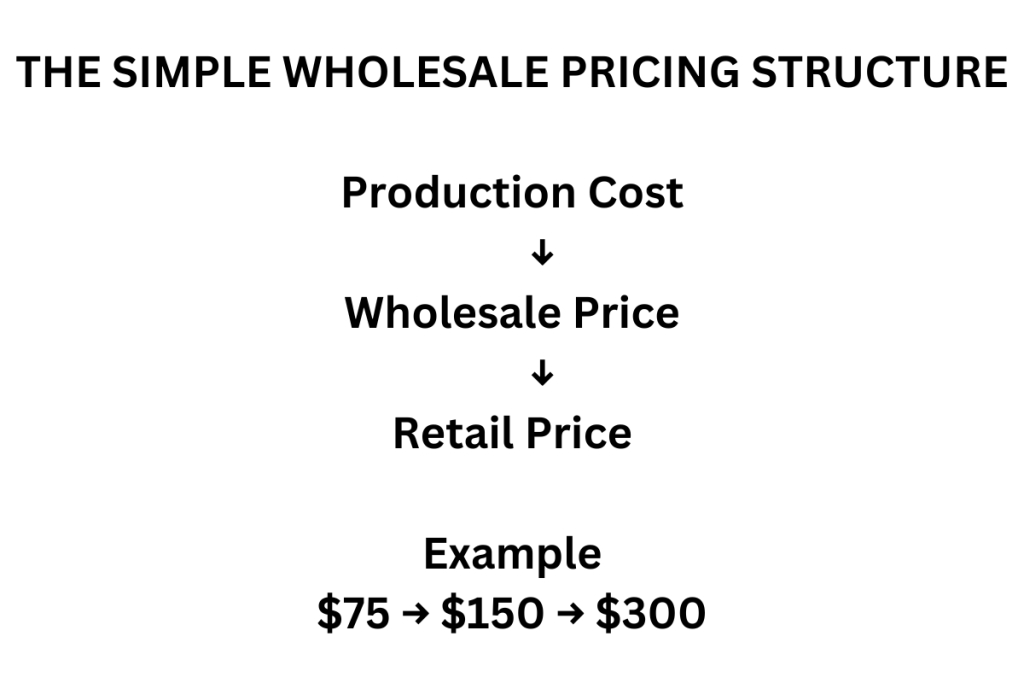
Production Cost × 2 = Wholesale
Wholesale Price × 2 = Retail Price
Example: Production cost: $75 → Wholesale price: $150 → Retail price: $300
Why it matters:
If production costs are too high relative to the intended retail price, it may be difficult for retailers to carry the product profitably. Thinking about pricing early in the design process helps emerging brands avoid these challenges.
Protecting Your Brand Through Consistent Pricing
Maintaining consistent pricing across retail partners is an important part of building trust and protecting a brand’s reputation.
Retailers want confidence that the brands they carry are committed to fair pricing practices and will not undercut them through inconsistent pricing or excessive discounting.
A clear and consistent pricing strategy supports long-term relationships with retail partners.

Closing
At Design Collective NY, we work with emerging designers to help them navigate the complexities of the wholesale market—from pricing strategies to buyer relationships and retail partnerships.
Understanding how retail pricing works is one of the foundational steps in building a brand that is not only creative, but also commercially sustainable.
About Design Collective NY
Design Collective NY is a platform dedicated to supporting independent and emerging fashion brands through wholesale readiness, buyer education, curated industry events, and strategic exposure. By connecting designers with retailers, media, and industry partners, DCNY helps brands navigate the business of fashion and grow sustainably.
Learn more about our initiatives and designer resources at designcollectiveny.com.
By Belinda Antwi